
Reviewed · KANHERI CAVES & GLOBAL PAGODA TOURS
Guided tour of Kanheri Caves, the 2000 year old Buddhist university in Mumbai
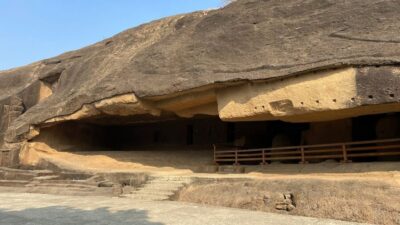
Kanheri Caves is not just a collection of rock-cut shrines. It was a Buddhist university that served students and teachers from the 1st century BC through the 10th century AD. You move through classrooms, meditation spaces, shrines, sculptures, inscriptions, and water systems carved into the stone.
I like two things right away: the tour puts the caves in their natural setting inside Sanjay Gandhi National Park, and a private guide can turn bare rock and worn carvings into a readable story. Pankaj and Madhu are named guides associated with the experience, and both are praised for explaining Buddhism, art, and daily life with patience.
The main consideration is time and exertion. The caves sit inside a large national park, and the visit involves walking and a climb toward the site. The advertised price of $160 per person is also a serious spend, though private transport, admission, and several hours of guiding make it easier to assess as a full-day Mumbai outing rather than a quick museum visit.
In This Review
- Key points at a glance
- Why Kanheri Caves matter beyond the stone
- From Mumbai hotel or cruise terminal to the national park
- Entering a 2,000-year-old Buddhist campus
- The Grand Chaitya and its stupa
- Sculptures, inscriptions, and clues in the rock
- Ancient engineering that made daily life possible
- What the five-hour cave visit feels like
- The value of a $160 private tour
- Who will enjoy this tour most
- Booking, cancellation, and practical details
- Should you book the Kanheri Caves tour?
- FAQ
- Where is the Kanheri Caves tour located?
- How long does the experience last?
- What time does the tour start?
- Is hotel pickup available?
- Is this a private tour?
- Is admission to Kanheri Caves included?
- Which guides may lead the tour?
- What can you see at Kanheri Caves?
- What happens if bad weather cancels the tour?
Key points at a glance
- A university carved into stone: Kanheri functioned as a major Buddhist learning center for roughly a thousand years.
- The Grand Chaitya: See the large meditation hall and its stupa, built to focus the monks’ attention.
- Private guiding: Your group has the guide to itself, with Pankaj and Madhu among the guides connected with this tour.
- Mumbai pickup: Collection is offered from your hotel or cruise terminal, with an 8:00 am start.
- Art and engineering together: Look for sculptures, relief carvings, paintings, inscriptions, and practical water systems.
- A flexible operator: Changes were handled kindly when one participant became ill during the climb, a useful sign for anyone concerned about the physical side.
Why Kanheri Caves matter beyond the stone
Kanheri gives you a rare chance to see how Buddhism worked as a living institution, not only as a set of beliefs or statues. Monks studied, meditated, taught, and lived here. Students came from different parts of Asia, making the site an early center of international learning.
That idea changes how you read the caves. A small chamber is no longer just a small chamber. It may have been a place for study, rest, meditation, or religious practice. An inscription can offer a clue about the people who supported the center. A water channel shows that practical needs mattered just as much as spiritual ones.
I find this approach far more useful than simply moving from one photo stop to another. The guide’s role is to connect the physical remains to the people who used them. Pankaj, in particular, is associated with long conversations about Buddhism and its development in India, while Madhu is noted for explaining the meaning of sculptures and remaining patient with questions.
You should still keep your expectations grounded. Kanheri is an archaeological site, not a polished indoor attraction. Some details are worn, and the scale of the complex can be hard to grasp without help. That is exactly where the private format earns its keep.
More Kanheri Caves and Global Pagoda trips:
- Mumbai: Kanheri Caves and The Golden Pagoda Temple
★ 4.7 · 108 reviews - Sanjay Gandhi National Park(SGNP) + Kenheri Caves + Lion Safari + Jain Temple
★ 5.0 · 88 reviews - Sanjay Gandhi National Park+ Kanheri Caves + Temple +Tigar Safari
★ 5.0 · 54 reviews
From Mumbai hotel or cruise terminal to the national park
The day begins with an 8:00 am pickup from your hotel or cruise terminal. The drive takes you away from central Mumbai and toward Sanjay Gandhi National Park, where the caves are located.
This transfer is more than dead time if you use it well. The guide begins talking during the journey, so you can ask about Buddhism, Mumbai, or the site before reaching the entrance. One especially useful part of the experience is the chance to connect the modern city outside the vehicle with the older world you are about to see.
Kanheri lies inside an 87-square-kilometer national park. That setting gives the visit a sense of distance from the city, even though you are taking a day trip from Mumbai. The park is an important part of the experience because the caves were not built in an isolated desert. They were placed in a wider environment that supported a long-lived religious center.
The supplied timing is slightly unusual: the overall experience is listed at about eight hours, while the Kanheri visit itself is described as five hours. I would read that as a full outing that includes pickup, transport, entry, and the cave visit. If you are arranging another appointment later in the day, leave plenty of room rather than treating the end time as exact.
Entering a 2,000-year-old Buddhist campus
The caves were used from the 1st century BC to the 10th century AD. That is a long span, and it helps explain why Kanheri is not one single monument with one fixed style.
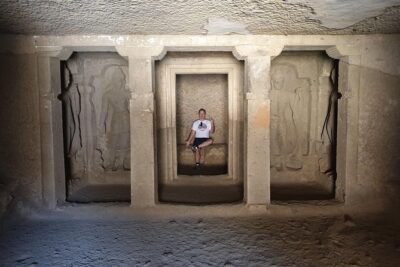
As you walk between the spaces, look for changes in the carvings and layout. You may see sculptures, relief work, inscriptions, and paintings that offer clues about different periods of use. The site’s value comes from this combination. Art shows how Buddhist ideas were presented, while inscriptions help connect the place to real people and events.
I would resist the urge to rush toward the largest hall. The smaller spaces can tell you just as much about ordinary monastic life. They make the complex feel like a campus rather than a ceremonial site alone.
Your guide can also explain how the caves served both religious and educational purposes. Students came to learn from teachers, and monks gathered for meditation. That makes Kanheri especially worthwhile if you are interested in how ancient institutions were organized.
A private tour helps here because you can stop when something catches your attention. If Pankaj or Madhu is leading, ask direct questions about a carving’s subject, the purpose of a room, or how Buddhist practice changed over time. The information provided for this experience strongly supports a question-led visit, not a silent walk from one numbered cave to the next.
The Grand Chaitya and its stupa
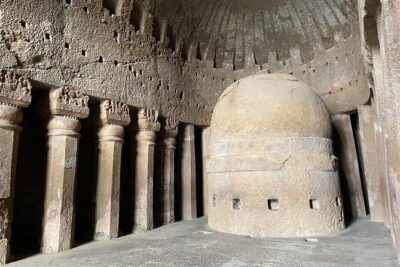
The Grand Chaitya is one of the central moments of the visit. This large hall was used by monks for meditation and gathering. Its stupa gave them a fixed point for concentration.
The stupa also carried spiritual meaning. A relic of an important teacher from the past would usually be placed inside such a structure. Your guide can explain why the form mattered and how the room supported meditation.
This is the kind of place where scale and purpose work together. You are not only looking at carved architecture. You are standing in a room designed for a particular kind of attention. The stupa was not simply decoration, and the hall was not merely a grand entrance.
Take time to look at the relationship between the hall, the columns, the carvings, and the central stupa. The guide’s interpretation is important because the stone itself cannot tell you how the space was used. Without context, you might see an impressive chamber. With context, you can picture a community gathering to study and meditate.
The Grand Chaitya may be the strongest reason to choose a guided visit instead of exploring alone. A guide can explain both the visible design and the religious purpose behind it, while giving you space to ask questions at your own pace.
A few more Mumbai tours and experiences worth a look
- Elephanta Caves & Island Guided Private Tour
★ 5.0 · 1,327 reviews - Group Guided Walking Tour in Fort and Colaba
★ 5.0 · 1,073 reviews - Mumbai: Elephanta Caves Half-Day Guided Tour with Expert
★ 4.8 · 1,032 reviews - Private Guided Walking Tour in Fort & Colaba
★ 5.0 · 895 reviews
Sculptures, inscriptions, and clues in the rock
Kanheri’s carvings are not all there for decoration. They reveal how Buddhism was taught and represented. Some sculptures are around 2,000 years old, and their condition makes careful explanation even more useful.
Look for the difference between a broad relief and a smaller detail. A guide may point out symbols, figures, or scenes that you would otherwise walk past. Madhu is associated with carefully examining the significance of individual sculptures, not just naming them.
Inscriptions add another layer. Even when you cannot read them, they show that the site had links to donors, teachers, and an organized community. They help move the story away from the idea of anonymous ancient monks. Kanheri was supported by people and connected to wider Buddhist networks.
Paintings are also part of the site, although the available information does not specify how many remain or what condition they are in. You might find that some are faint or difficult to see. Keep expectations realistic, and let the guide explain what is visible rather than expecting every surface to look complete.
The best way to approach the art is slowly. Ask what a figure represents, why it was placed in a particular location, and what it tells you about Buddhist practice. This private format gives you the time to do that without having to match the pace of a large group.
Ancient engineering that made daily life possible
Kanheri’s religious importance gets most of the attention, but its engineering is just as interesting. The site includes practical systems that helped people live and study there.
The tour specifically highlights novel engineering techniques, including arrangements that made the complex workable over a long period. Water management would have been essential to a resident community, and the guide can help you notice features that are easy to miss when you focus only on statues and shrines.
This is where the site feels most human to me. Meditation and scholarship depended on ordinary needs being met. People needed places to live, water to use, paths to follow, and spaces organized for communal and private activity.
You should ask the guide to point out engineering details as you move between the caves. It is easy to remember a dramatic sculpture and forget the systems that allowed a Buddhist center to function. The tour’s strongest lesson is that Kanheri was both a sacred place and a working institution.
What the five-hour cave visit feels like
The cave portion takes about five hours, so this is not a quick stop squeezed between city sights. You will have time to examine several areas, listen to explanations, and move between different types of spaces.
The physical side deserves attention. The caves are reached by walking and a climb, and one participant became ill during the hike on a previous outing. The operator adjusted the arrangements to accommodate that unexpected problem. That does not remove the need to pace yourself, but it suggests that you can speak up if the route becomes difficult.
I would wear practical footwear and carry only what you need, though the supplied tour details do not specify equipment or clothing requirements. Plan for a walking-focused visit rather than a vehicle-based sightseeing loop.
Because the activity requires good weather, rain or poor conditions can affect the day. If the operator cancels for weather, you are offered another date or a full refund. That policy matters in Mumbai, where conditions can change your comfort and the practicality of a long outdoor visit.
The value of a $160 private tour
At $160 per person, this is not the budget way to see Kanheri Caves. The value depends on what you want from the day.
You are paying for a private experience, pickup from your hotel or cruise terminal, admission to the caves, and a guide for a visit that lasts roughly eight hours overall. Only your group participates, so you do not have to share the guide’s attention with a busload of strangers.
That format is especially useful at a site where interpretation matters. If you were only looking for a quick look at old carvings, the price could feel high. If you want to understand the Buddhist university, discuss the sculptures, and ask about the evolution of Buddhism in India, the private guide becomes the main reason to consider it.
The tour also supports local employment through local guides and businesses. That does not automatically make a tour good value, but it is a meaningful part of the buying decision if you prefer your spending to remain closer to the place you visit.
Group discounts are offered, which may improve the per-person cost if you are traveling with family or friends. Since the tour is private, larger groups can also benefit from having one shared experience rather than booking separate arrangements.
Who will enjoy this tour most
I would recommend Kanheri to you if you enjoy archaeology, Buddhist art, religious history, or places where the original purpose still shapes what you see. It also suits first-time visitors to Mumbai who want a substantial day outside the central city.
The tour is a good fit if you prefer conversation over a fixed audio guide. Pankaj and Madhu are connected with the experience, and the available details point to guides who explain carefully and welcome questions. That matters if you want to discuss Buddhism beyond dates and architectural labels.
Families and mixed-interest groups may also find the private format helpful. One person can ask about sculpture, another about engineering, and another about daily life without slowing down a larger party.
I would think twice if you want a short, effortless excursion or if a climb and several hours of walking do not suit you. The site is large enough to require time, and the experience is built around exploration rather than a quick photograph.
Booking, cancellation, and practical details
You receive confirmation when you book, and the experience has a mobile ticket. Pickup is offered from a hotel or cruise terminal, with an 8:00 am start.
Free cancellation is available up to 24 hours before the start time for a full refund. Within 24 hours, cancellations and changes are not accepted, and the amount paid is not refunded. All cut-off times use Mumbai local time.
The experience is described as suitable for most participants, but the climb means you should consider your own comfort before booking. If you become unwell during the visit, tell the guide promptly. The operator has shown flexibility in handling an unexpected illness, but you should still treat the physical demands seriously.
Should you book the Kanheri Caves tour?
Book it if you want Kanheri to make sense, not merely appear in your photo collection. The ancient university, Grand Chaitya, stupa, sculptures, inscriptions, and engineering details reward explanation, and a private guide gives you room to ask questions.
The $160 price is easiest to justify for cruise passengers, first-time Mumbai visitors, or small groups who value hotel pickup and a full guided day. It is less appealing if you are comfortable arranging your own transport and reading the site without help.
For the best experience, start early, allow the full day, pace yourself on the climb, and ask about the meaning behind the carvings. That is where Kanheri changes from an impressive set of caves into a picture of Buddhist study and community life over many centuries.
FAQ
Where is the Kanheri Caves tour located?
Kanheri Caves are inside Sanjay Gandhi National Park in Mumbai, India. The park covers 87 square kilometers.
How long does the experience last?
The overall tour lasts approximately eight hours. The guided visit at Kanheri Caves is described as lasting about five hours.
What time does the tour start?
The stated start time is 8:00 am.
Is hotel pickup available?
Yes. Pickup is offered from your hotel or cruise terminal.
Is this a private tour?
Yes. This is a private activity, and only your group participates.
Is admission to Kanheri Caves included?
Yes. Admission is included in the experience.
Which guides may lead the tour?
Pankaj and Madhu are named guides associated with this experience. Pankaj is noted for discussions about Buddhism, while Madhu is noted for explaining the significance of sculptures with patience.
What can you see at Kanheri Caves?
The visit includes Buddhist sculptures, relief carvings, paintings, inscriptions, the Grand Chaitya, and its stupa. The tour also explains the site’s architecture and engineering methods.
What happens if bad weather cancels the tour?
If poor weather causes the experience to be canceled, you are offered another date or a full refund. You can also cancel up to 24 hours before the start time for a full refund.
Just added around Mumbai
- Temples & Vineyards: Private Tour to Nashik from Mumbai★ 4.5 · 3 reviews
- Mumbai: Private City sightseeing and Dharavi Slum Tour★ 5.0 · 3 reviews
- Mumbai: Full Day City Sightseeing with Lunch, Car & Guide★ 4.3 · 3 reviews
- Elephanta Island Private Speedboat Tour from Mumbai – 6pax★ 5.0 · 3 reviews
- Mumbai: Elephanta Island and Elephanta Caves Guided Tour★ 4.4 · 3 reviews
- Mumbai Sightseeing Tour by Public Transport with family Lunch★ 5.0 · 3 reviews
- Mumbai by Dawn★ 4.5 · 3 reviews
- Mumbai Dharavi Slum Community Tour★ 5.0 · 3 reviews
Kanheri Caves & Global Pagoda Tours, compared.
Sanjay Gandhi National Park(SGNP) + Kenheri Caves + Lion Safari + Jain Temple
Read our review →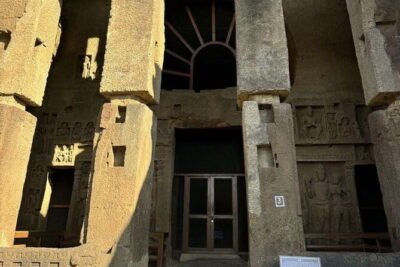
Sanjay Gandhi National Park+ Kanheri Caves + Temple +Tigar Safari
Read our review →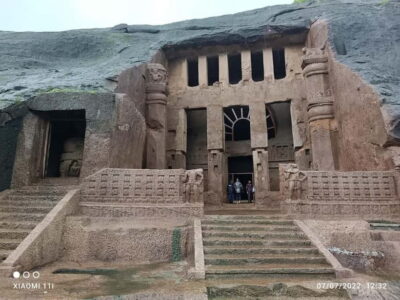
Buddhist Kanheri Caves with Golden Pagoda Temple
Read our review →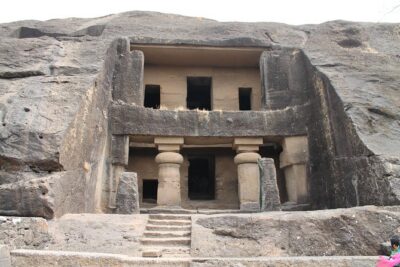
Kanheri Cave with Global Vipassana Pagoda Tour in Private Vehicle
Read our review →
Private Guided Tour in Kanheri Cave with Transfers
Read our review →
South Mumbai City with Kanheri Cave Tour in Private Vehicle
Read our review →Browse the lists this tour appears in